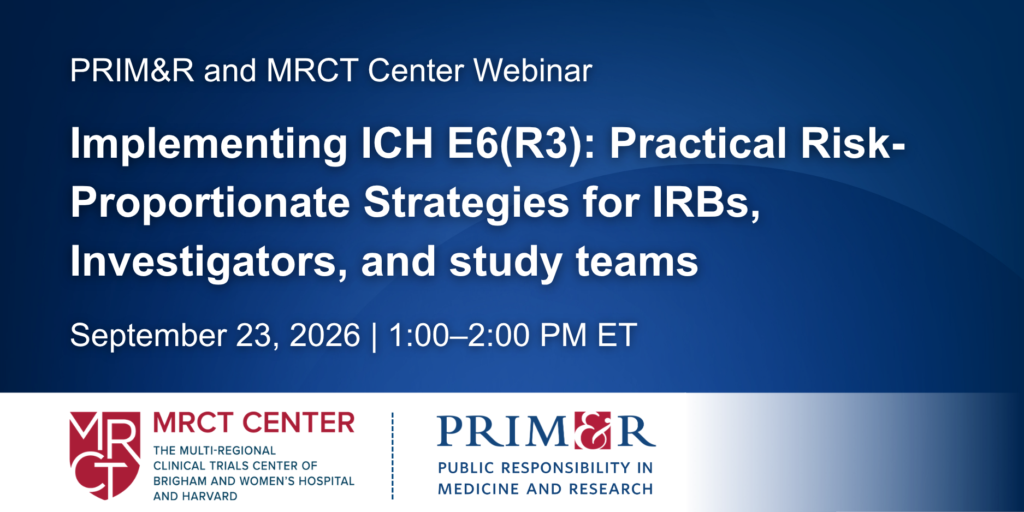
The MRCT Center is co-presenting a PRIM&R webinar on putting ICH E6(R3) into practice, and CIP credits are available. E6(R3) was adopted in January 2025 (Principles and Annex 1) and June 2026 (Annex 2). Quality by design, fit-for-purpose, risk proportionality, and essentiality of a record are now everyday vocabulary. What does that mean for IRBs, Investigators, and research teams? How do IRBs approach protocol review with a risk-proportionate lens? How do Investigators exercise appropriate oversight of research and determine which essential records should be maintained on file? David Nickerson, Head of Clinical Quality Management at EMD Serono and PhRMA Topic Lead for ICH E6(R3); Rebecca Stanbrook, Consultant at RESaltas GmbH, EFPIA Topic Lead for ICH E6(R3); and Benjamin C. Silverman, MD, Senior IRB Chair in Human Research Affairs at Mass General Brigham, will lead the panel, moderated by Sarah White, MRCT Center Executive Director.
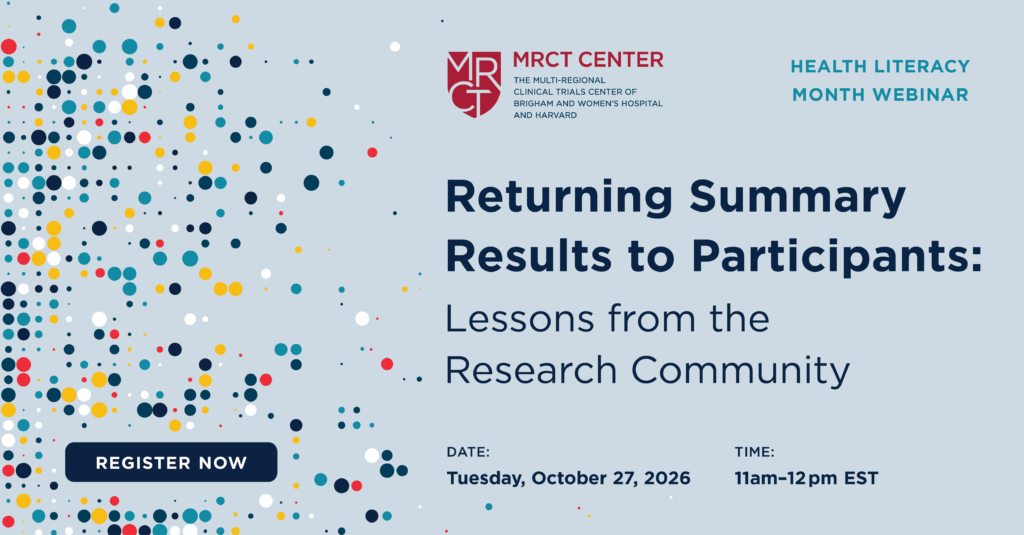
Some research teams began returning summary-level study results to participants long before the NIH released its draft policy. This Health Literacy Month webinar asks three of them what they did, why, and what they learned in very different settings: community-based clinical studies, a complex platform trial still underway, and a population biobank in Italy designed to run for decades. The panel covers the practicalities of results return, and attendees will leave with concrete lessons they can apply to their own studies, even with limited resources.
Join Barbara Bierer, Faculty Director of the MRCT Center, and Sylvia Baedorf Kassis, MRCT Center Program Director, for a panel discussion with Lawrence Appel, C. David Molina Professor of Medicine, Epidemiology, and International Health at Johns Hopkins University; Abby Gregory, Program Manager, Scientific Publications, at the American Society of Clinical Oncology (ASCO); and Deborah Mascalzoni, Research Group Leader at the Institute for Biomedicine, Eurac Research, and Associate Professor of Biomedical Ethics at Uppsala University.
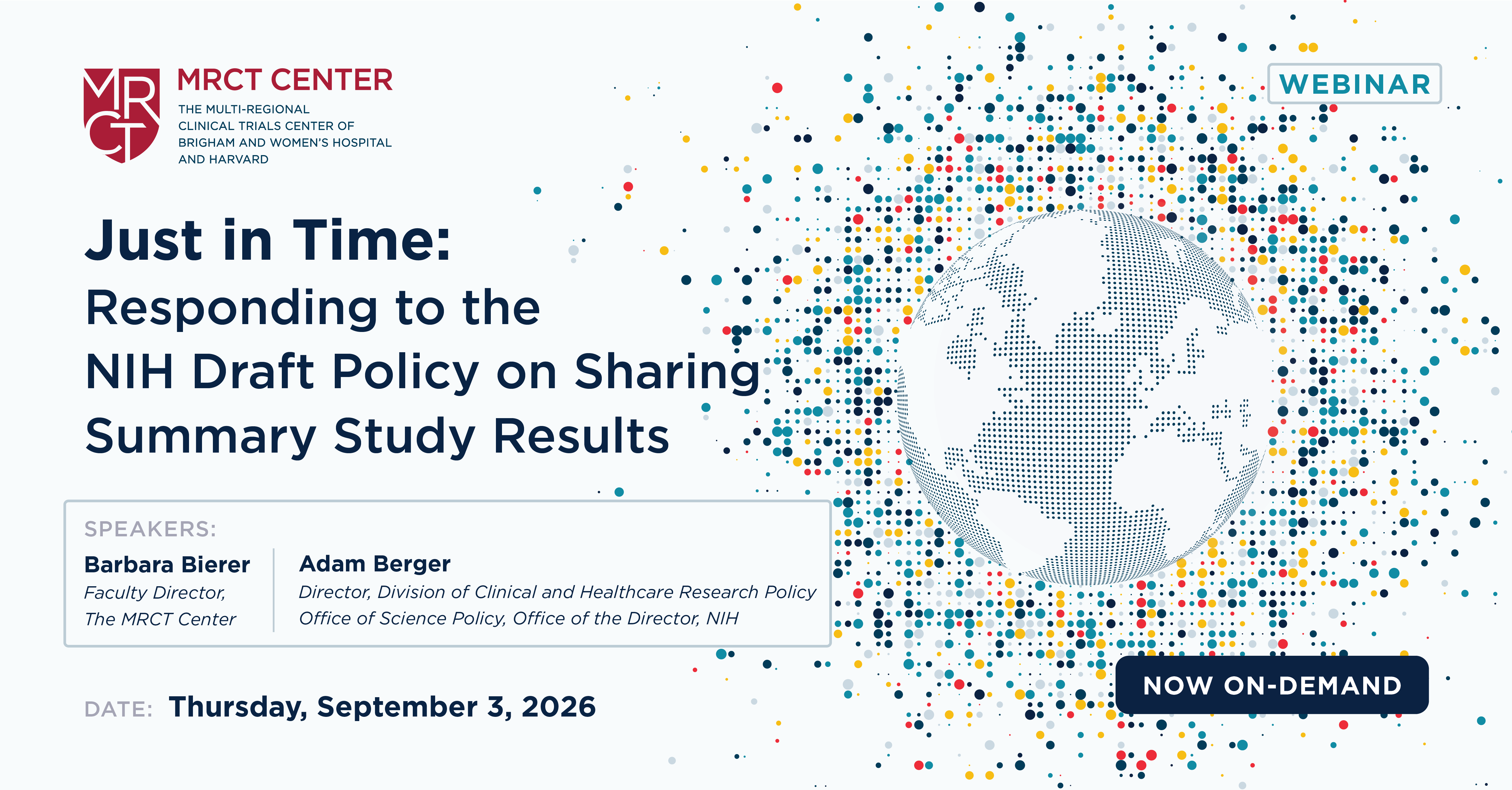
On Thursday, September 3, 1-2 PM ET the MRCT Center hosted a webinar featuring MRCT Center Faculty Director Barbara Bierer and the NIH Office of Science Policy’s Adam Berger to discuss last week’s release of the NIH Draft Policy for Sharing Summary Level Study Results with Clinical Research Participants for public comment. This policy, once finalized, will ensure that participants in NIH-funded clinical research receive the results of thestudies in which they participate. The policy extends beyond clinical trials to all clinical research involving human participants.
After a brief introduction, the draft policy was presented and discussed, followed by a discussion of active issues and considerations for institutional implementation. We also focused on supplemental guidance that would be helpful for the NIH to develop, followed by time for open questions.
The Joint Task Force for Clinical Trial Competency (JTF), anchored at the MRCT Center, develops and disseminates standards and practices for the global clinical research workforce. By fostering a cohesive and collaborative approach, the JTF ensures that professionals have the competencies to conduct clinical trials ethically and effectively.
Our international team of investigators, educators, and clinical research professionals has developed and/or utilizes a framework that defines the knowledge, skills, and attitudes necessary for conducting safe, ethical, and high-quality clinical research.
The MRCT Center Annual Symposium returns to Boston for a full day of discussions on ethical, actionable, and practical solutions to today’s global clinical research challenges. Free and open to all, in person or online.
Keynote: Karim Mikhail, Director, Center for Biologics Evaluation and Research (CBER), U.S. Food and Drug Administration
We are pleased to welcome Karim Mikhail as this year’s keynote speaker. Director Mikhail will give an update on Operation TrialBlazer, the HHS roadmap for maintaining U.S. leadership in early clinical research and development, and the initiatives planned under it. He brings more than two decades of leadership across industry and FDA.
Panel 1 | Response to Keynote: Ideation to Implementation and Scale
Leaders from industry and academic medicine respond to the keynote and discuss how Operation TrialBlazer’s planned initiatives can move from roadmap to practice.
Panelists: Ginny Beakes-Read, Johnson & Johnson; Karen Hartman, Mayo Clinic; Jennifer Sheller, Merck
Moderators: Barbara Bierer, MRCT Center; Mark Barnes, Ropes & Gray and MRCT Center
Panel 2 | Returning Summary Results to Participants: Lessons from the EU and UK Experience: Optimizing for US Application
NIH has released a draft policy on sharing summary-level study results with participants, with comments due October 26. Participant, researcher, and regulator voices from the EU and UK join NIH to discuss what they learned returning aggregate results, what they would do differently, and what they recommend for those just getting started.
Panelists: Adam Berger, U.S. National Institutes of Health; Johanna Blom, University of Modena, Italy; Clive Collett, Health Research Authority, UK; Veronica Popa, EURORDIS
Moderator: Sylvia Baedorf Kassis, MRCT Center
Panel 3 | Post-Trial Obligations: An Integrated Decision Model for Clinical Trial Placement
This panel explores the circumstances that challenge trial placement, when durable access is achievable in a host country or community, and when reciprocal benefits are acceptable if it is not. Panelists will also discuss the MRCT Center’s draft Integrated Decision Model for Clinical Trial Placement, developed by its Post-Trial Responsibilities Task Force to guide sponsors.
Panelists: Ginny Acha, Merck; Joseph Ali, Johns Hopkins University; Karla Childers, Johnson & Johnson
Moderator: Sarah White, MRCT Center
MRCT Center Updates
Select initiatives from across our portfolio:
AI and the Administration of Research
Childhood Cancer Academic–Industry Collaborative Platform Trials (C3PT)
Proportionate Oversight in Decentralized Clinical Trials
TRACE
Thursday, October 22 | Data Sharing
The second day focuses on data sharing and is co-organized with Vivli. Attend one day or both, in person or virtually. Please click here to view the draft agenda.
Thursday, October 22. A day on data sharing, co-organized with Vivli. Charlie Blanchard, Associate Vice President, Head of Global Privacy and Data Protection at Amgen, will give the keynote address: “Sharing is Caring. So Why is Trusted Sharing Getting Harder? A Privacy Officer’s View from the Intersection of Science, Privacy, and Sovereignty.” Panels will focus on U.S. developments affecting international data sharing, the European Health Data Space, and electronic health records in U.S.
Location: Ropes & Gray, Boston, MA, and hybrid.
I am attending in person. What do I need to know?
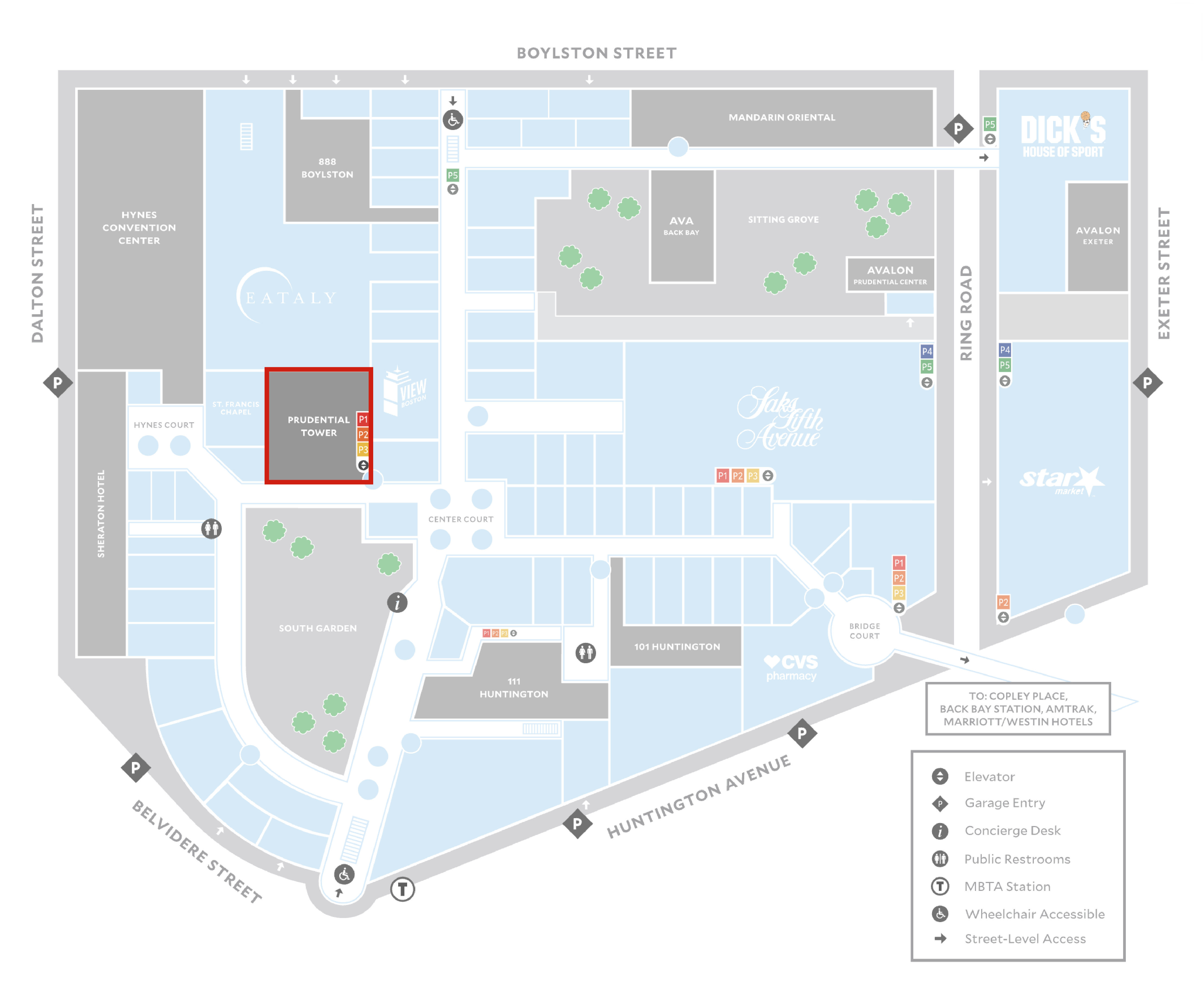
The Annual Symposium will take place at the offices of Ropes & Gray, 800 Boylston St., Boston, MA, 02199
You will need a photo ID to enter. All attendees must pre-register to participate.
The Ropes & Gray offices are located inside the tower at the Prudential Center. Click here to view a map of the Prudential Center.
There is no charge to attend the MRCT Center Annual Meeting.
A continental breakfast, lunch, and cocktails/appetizers are offered. Please let us know if you have dietary restrictions.
Meeting slides and related resources will be shared with all registrants after the meeting.
Please share the registration information with others in your network.
You are also invited to attend a day focused on Data Sharing, co-organized with Vivli, on Thursday, October 22.
Location: Ropes & Gray, Boston, and virtual.
This event is also free for all registrants.
Click here for a list of hotels near the Prudential Center.
I am attending virtually. What do I need to know?
There are two separate Zoom coordinates, one for Wednesday’s program and one for Thursday’s program. Those coordinates will be shared one week in advance via email.
Can I attend some events in-person and others virtually?
Yes! While in-person attendance is preferred, virtual participation – either entirely or in part – is welcome. Please indicate which events you will attend in-person or remotely on the registration form. Note: cocktails on Wednesday, October 21 are only open to in-person attendees for Wednesday’s meetings.
Do I need to register separately for the Vivli/Mrct center meeting on Thursday, October 23?
No, you can register for all events from the same registration form.
ICH E6(R3) represents a major modernization of Good Clinical Practice since the original 1996 guideline, building on the risk-based and quality-focused principles introduced in E6(R2). It further emphasizes a proportionate, risk-based approach to trial design and conduct, incorporating Quality by Design and risk proportionality as foundational principles. The guideline expands expectations for data governance and clarifies sponsor and investigator responsibilities. However, guidelines alone do not drive change in practice; effective implementation depends on training and education.
As the ICH training partner selected to develop the ICH E6(R3) training curriculum, the MRCT Center, in collaboration with the ICH E6(R3) Expert Working Group, is producing a five-module course to translate the ICH document into actionable guidance for the people who run trials.
Clinical Trials Week honors trial participants and the workforce whose training and preparation shape their care. In that spirit, join Sarah White and a panel of experts representing the US FDA and industry sponsors, who are also members of the ICH E6(R3) Expert Working Group, to highlight the importance of implementing the ICH E6(R3) guideline correctly and discuss key areas of the ICH E6(R3) guideline that may be challenging to implement.
The session will walk through a practical case example applying Quality by Design principles, including the identification of Critical to Quality factors, and will explore implementation of ICH E6(R3) across key areas, such as data governance, sponsor and investigator responsibilities, and the incorporation of diverse perspectives in trial design and planning. The session will underscore the importance of all individuals performing clinical trial activities in understanding these critical study attributes and how their role contributes to safeguarding them and ensuring they are consistently protected through their day-to-day decisions and actions. It will also spotlight the available ICH E6(R3) training modules. Attendees will leave with an understanding of the foundational concepts in ICH E6(R3), how Quality by Design can be applied to clinical trial design and conduct, and how to introduce and disseminate the training to their teams.
The MRCT Center Clinical Research Glossary, a CDISC global standard since 2023, offers 216 plain-language definitions for clinical research terms used across the research enterprise.
Sylvia Baedorf Kassis, Program Director for the MRCT Center’s Health Literacy portfolio, will host a conversation with panelists from two sponsor organizations and a patient partner on how the glossary is being adopted, implemented, and used in practice.
Panelists include Anna Subrizi, Patient Empowerment Team Lead at Bristol Myers Squibb; Sudipta Chakraborty, who leads the Health Literacy Center of Excellence at Biogen; and Bernard Coley, a patient partner who applies the glossary in his Parkinson’s disease advocacy and education work.
The panel will cover how sponsors integrate the glossary across research and development, commercial, and patient-facing functions, as well as the business case for plain language and its impact within organizations and clinical research studies.
The MRCT Center will also share a preview of the new terms heading into a 30-day public review this June. Public review ensures that the glossary is a living, consensus-driven CDISC global standard. Each new definition is reviewed by researchers, sponsors, patients, and advocates before adoption, so the professionals who design trials have a trusted resource to communicate with participants and help enable informed decision-making. Attendees will learn what public review entails and how to submit feedback through the MRCT Center survey or the CDISC Wiki JIRA process.
Please join us on Monday, May 18, from 12:00 – 1:00 pm ET for the fourth webinar in the MRCT Center’s AI Digital Twins and Synthetic Data series. This webinar will focus on data provenance and quality, model validation, and the emerging infrastructure needed to support the clinical and regulatory adoption of these technologies. It will explore how to evaluate whether the models used are credible, whether the data underlying them are reliable and traceable, and whether the outputs can be verified and validated for use in regulatory and clinical decision-making. Panelists will discuss what it means for a model to be “fit for purpose,” how definitional differences among these technologies shape regulatory review, and how clinicians, sponsors, reviewers, and regulators may use, interpret, and deploy these tools. The session will include a moderated discussion and time for audience Q&A.
Join the MRCT Center, CANTRAIN, and EUPATI to learn the results of an effort to integrate patient partnership into the existing Joint Task Force (JTF) Framework for Clinical Trial Competency.
The initiative, entitled “JTF-Patient Partner Project (P3) – Co-Creating Clinical Research Competencies to Support Effective Patient Partner Engagement Activities,” united a representative group of patient and caregiver partners, academic researchers and study staff, industry representatives, and others, to imagine what patient partnership within the JTF Framework would cover and include.
The updates proposed in JTF-P3 include a supplementary addendum focused on integrating patient partners into the study team. The results provide a blueprint that is both operational and aspirational, supporting more skilled, inclusive, and equitable clinical research teams to achieve results faster through more responsive and impactful trials.
By the end of this webinar, attendees should be able to:
Explain what patient partners and partnerships are, and why patient partner inclusion within study teams is so important
Explain the JTF-P3 process
Describe the JTF-P3 updates to the original JTF Framework
Identify next steps in the process of meaningful patient partner integration into study teams
This webinar will be offered twice, with the same content presented by different regional panelists. One registration and one Zoom link cover both sessions. Register once and join whichever session best fits your schedule.
Session A — May 7, 9:00 AM – 10:00 AM EDT (Boston/Ottawa); 3:00 PM – 4:00 PM CEST/SAST (Brussels/Cape Town); 6:30 PM – 7:30 PM IST (New Delhi)
Session B — May 7/8 8:00 PM – 9:00 PM EDT (Boston/Ottawa); 9:00 AM – 10:00 AM JST (Tokyo, May 8); 10:00 AM – 11:00 AM AEST (Melbourne, May 8)
This meeting is open to sponsors of the MRCT Center Bioethics Collaborative and select invited guests. For more information about the Bioethics Collaborative and how to become a sponsor, click here.